Reliable sensor cables for dynamic applications
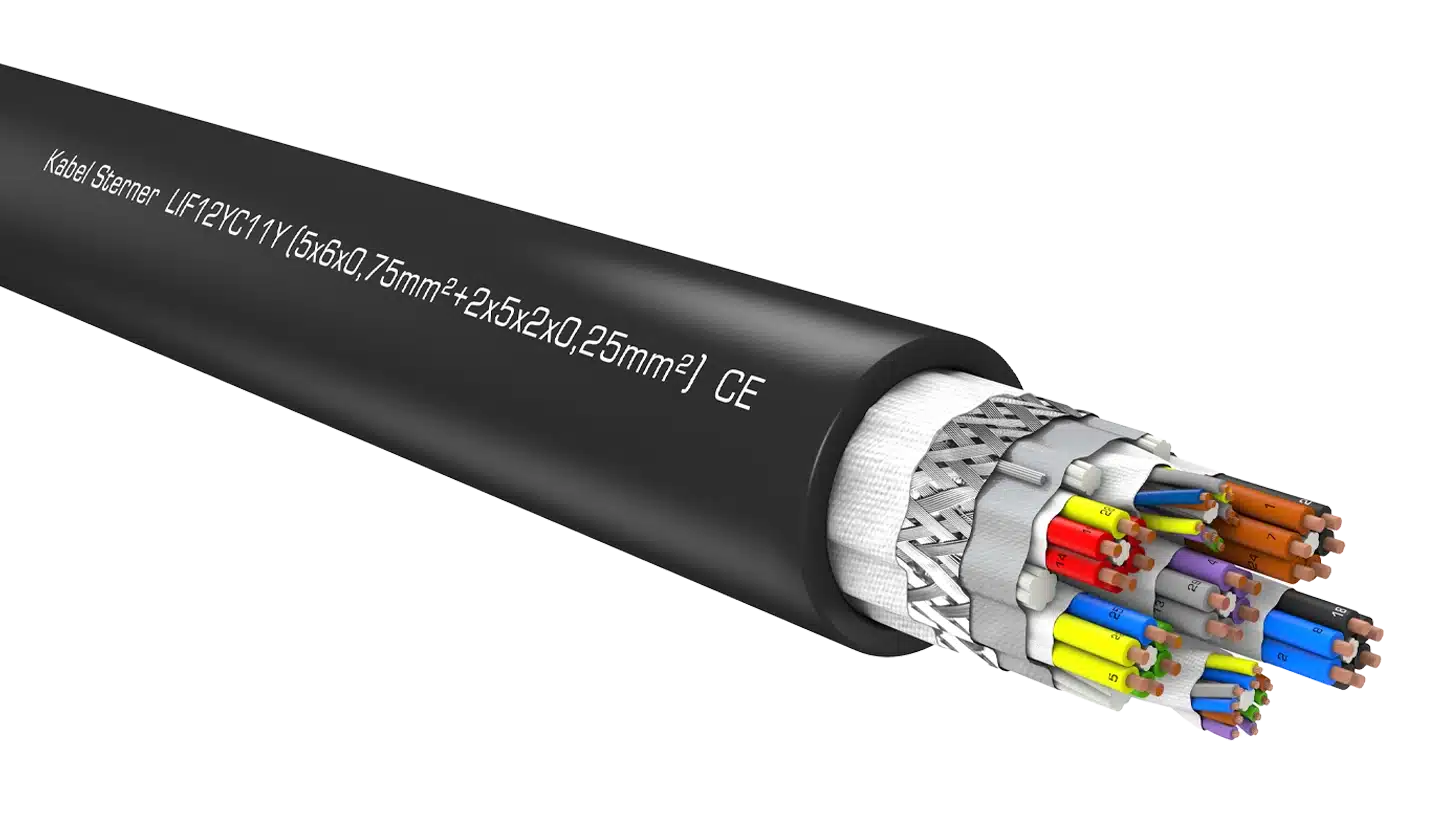
Our highly flexible sensor cables are specifically developed for the extreme requirements in robotics and automation. They ensure precise signal transmission, maximum reliability, and outstanding durability – even during the most dynamic movements and in demanding industrial environments.
- ISO certified
- Made in Germany
Industry
Robotics and Automation

In robotics and automation, cables are crucial for the performance of modern systems. Sensor cables used here must withstand extreme mechanical stresses such as constant bending, torsion, and tensile forces, while ensuring reliable power and signal transmission. Robustness and flexibility are essential to master dynamic movements and demanding operating conditions.
Special requirements:
Sensor cables in robotics and automation must handle millions of movements in energy chains or robot joints. They are resistant to abrasion, oils, chemicals, and temperature fluctuations. These properties make them the ideal solution for demanding industrial applications.
Control cables:
Control cables are used for the precise transmission of control commands between system components. They are characterized by high flexibility and mechanical strength to withstand the movements of modern robotic arms.
Motor connection cables:
These cables supply motors with energy and are designed to operate reliably even under high electrical and thermal loads.
Servo cables:
Servo cables transmit signals for the precise control of servo axes. Their construction guarantees excellent electromagnetic compatibility and resistance.
Data and bus cables:
These cables enable smooth communication between control systems and machines. They ensure reliable transmission even at high data rates.
Technical details:
The requirements for cables in robotics vary greatly depending on the application. Common cross-sections range from 0.14 mm² to 50 mm², while the sheath materials are designed for high flexibility and durability. Depending on the area of application, the cables can be designed for torsional loads of up to ±360° per meter.